WHAT IT MEANS TO MAKE AMERICA HUMAN AGAIN
By Pridhvi Sunain Zoro
By Pridhvi Sunain Zoro
I took an oath to the United States Constitution while simultaneously sitting in seminars at UC Berkeley questioning the systems that Constitution protects. I wore a uniform that represents one America while living in Santa Monica, California, surrounded by another. For years I moved between these two worlds - conservative and liberal, discipline and dissent, flag and critique - and what struck me was not the difference between them. It was the exhaustion underneath both.
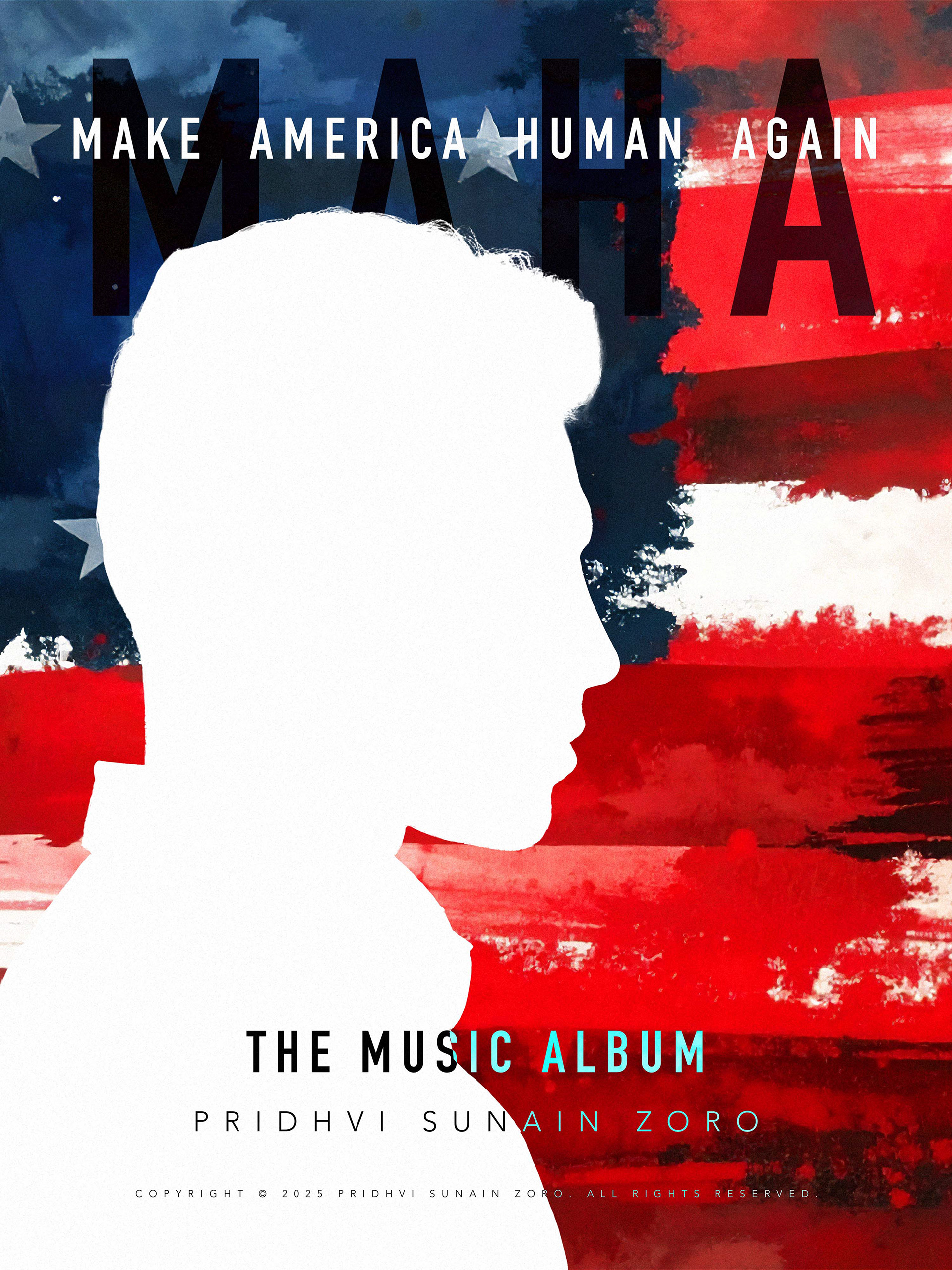
That exhaustion became MAHA: Make America Human Again.
Between Two Americas
I was not born here. I was born in Guntur, Andhra Pradesh, India, and raised across multiple states in South Indian states - Andhra Pradesh, Telangana, Tamil Nadu, Karnataka - among local communities and expatriate families from France, North Africa, North Americas before I relocated to Santa Monica, California. Growing up as a third culture kid means you are always translating. You translate language, behavior, expectation, identity. You learn early that "normal" is a construction, and that the version of normal being sold to you depends entirely on who is doing the selling. In California I grew up around my sponsor family russian americans, German americans, Korean, hispanic, African, Swedish, Filipino, Vietnamese and Chinese american communities. As my world started to expand with many international friends at UCLA, UC Berkeley and Santa Monica College as a third culture adult.
When I arrived in the United States, I encountered two dominant versions of America being sold simultaneously. One emphasized sacrifice, duty, order, and patriotism. The other emphasized critique, equity, systemic analysis, and reform. I ended up living inside both at the same time - enlisting in the United States Air Force Reserve in April 2021 while pursuing a second career after working in Hollywood filmmaking, with an interdisciplinary degree in AI Management and Data Analytics at UC Berkeley, prior studying Business and Management of Entertainment at UCLA.
Neither world was wrong. Both were incomplete. And underneath the ideology of each, I kept finding the same thing: people who were tired. People working harder than their parents ever did, for less security, less stability, and less time to simply be human.
That observation became the seed of MAHA.
Why "Human Again"
The title carries a deliberate contradiction. "Make America Great Again" has become one of the most polarizing phrases in modern American political life. To respond with "Make America Human Again" is not simply a rebuttal - it is a question. What does it mean to be human in a country that measures human worth through productivity, consumption, and economic output?
It also feels careless to call the United States "America," because America is a continent. Everyone who lives across it is American. The shortcut we take with that word is the same shortcut we take with our politics, our identities, and our understanding of one another. MAHA is built on that contradiction - using the familiar acronym while quietly indicting the thinking behind it.
It also feels incomplete to call MAHA simply 'Make America Human Again' without acknowledging the other MAHA in circulation - the Trump administration's 'Make America Healthy Again,' a phrase attached to anti-vaccine rhetoric and pharmaceutical skepticism. The acronym collision is intentional. Health is impossible without humanity. You cannot fix a body while ignoring the soul of the society it lives in. MAHA uses the familiar letters while quietly indicting the thinking behind both versions.
The Architecture of Collapse
MAHA is structured across three phases: Collapse, Humanity, and Ascent. This was not a commercial decision. It was an honest one.
Phase I begins with "Freaking Dance" (clean) / "Fucking Dance" (explicit), a track about the performance modern capitalism demands from its participants. Clock in, clock out, survive the race, pretend the dance is voluntary. The song is almost funny - until you realize the microphone has become a weapon. Beneath the beat is a refusal - the moment the body rebels before the mind catches up.
"Falling Through the Fire" follows as the emotional crash after rebellion. It is a love song, but not a simple one. It is about two people pulled apart by the demands of survival, unable to reach each other across the distance that exhaustion creates. The fire in the song is not passion. It is time. It is aging. It is realizing you are still falling as the years pass.
"Give Me a World" closes Phase I as both prayer and accusation - a meditation on ecological grief and consumer culture, longing for a world where growth does not come at the cost of sanity or the planet itself.
The Turning Point
Phase II opens with "Human Again," the album's theme song and its emotional center. The opening line - "Oh say, can you see" - is a direct invocation of "The Star-Spangled Banner." Not as parody, but as accountability. This song asks the country to look at itself honestly: laws that bend for the wealthy while the poor shoulder blame, a working class that bleeds for a dollar to keep a system alive that was never designed to keep them alive in return.
The arrangement reflects the dual emotional reality of the album. A recurring hum represents peace. The electric guitar represents the scream. Both coexist, because both are necessary. The final word of the song "again" - is intentional. It does not mean return. It means keep trying.
"Love Just Fades Away" examines modern intimacy reshaped by algorithms and endless choice. ‘Children of the Storm' confronts gun violence and the hypocrisy of a society that claims to protect life while abandoning children in classrooms. The artwork makes the indictment explicit: the Statue of Liberty holding an assault rifle, standing atop a pile of children's bodies. The symbol of American freedom weaponized against the most vulnerable - a symbol the Second Amendment has made untouchable, even as children are buried. But the criticism extends beyond domestic borders - the children dying in Gaza, in conflict zones sustained by American foreign policy, are part of the same silence. Liberty, the image argues, has a body count. These are not political songs in the narrow sense. They are human songs about the cost of forgetting our shared humanity.
Ascent as Practice
Phase III does not offer resolution. It offers clarity.
"Shades With Ease" begins from a simple biological observation: blood types do not recognize skin color. We are separated on the outside, not on the inside. The song is not about pretending differences do not exist. It is about seeing through them - recognizing that identity does not have to mean separation, and that history does not have to keep repeating itself if we are willing to face it honestly.
"Slash the Ghost" addresses the cultural epidemic of emotional avoidance - ghosting as a reflex, silence as armor, disengagement as survival strategy. The sword in the song is not violence. It is language. It is the willingness to stay in the room.
"Live Beyond" closes the album as a conversation with the self. Are you here to fit in, or to leave something real behind? The repetition of "Who am I?" is not confusion. It is awakening - the moment identity stops being inherited and starts being claimed.
What MAHA Is Really About
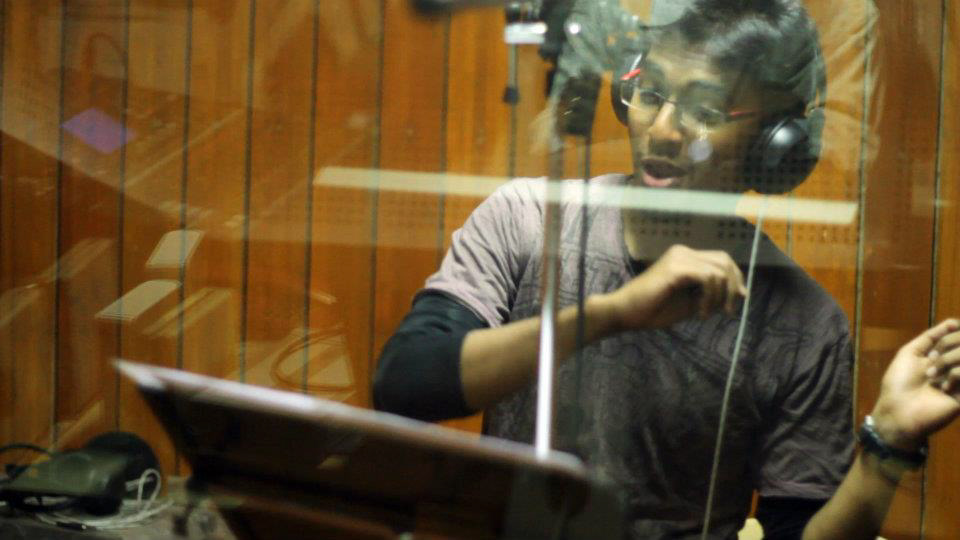
I wrote this album during a time when the United States felt loud, fractured, and strangely unfamiliar - both outside and inside myself. I watched people in my community paying taxes, contributing, surviving - being targeted while systemic exploitation at the top went unchallenged. I watched the wealthiest nation on the planet fail to provide basic safety nets: healthcare, education, housing stability, childcare. I watched community become a luxury instead of a foundation.
MAHA is not a political manifesto. It is not a protest record in the traditional sense. It is a concept album about what it costs to stay human when the world keeps demanding that you perform, consume, compete, and forget.
The cowboy is a stolen symbol. The handcuffs are a present reality. And the question the album keeps returning to - what does it mean to be human again? - is not a question I can answer for anyone else.
It is only a question I can keep asking, again and again, in peace and in screams.
Pridhvi Sunain Zoro is a singer-songwriter, composer, and filmmaker based in Santa Monica, California.
His debut concept album MAHA: Make America Human Again is out now via PSZ Records. Instagram: @pridhvisunainzoro
Album Credits
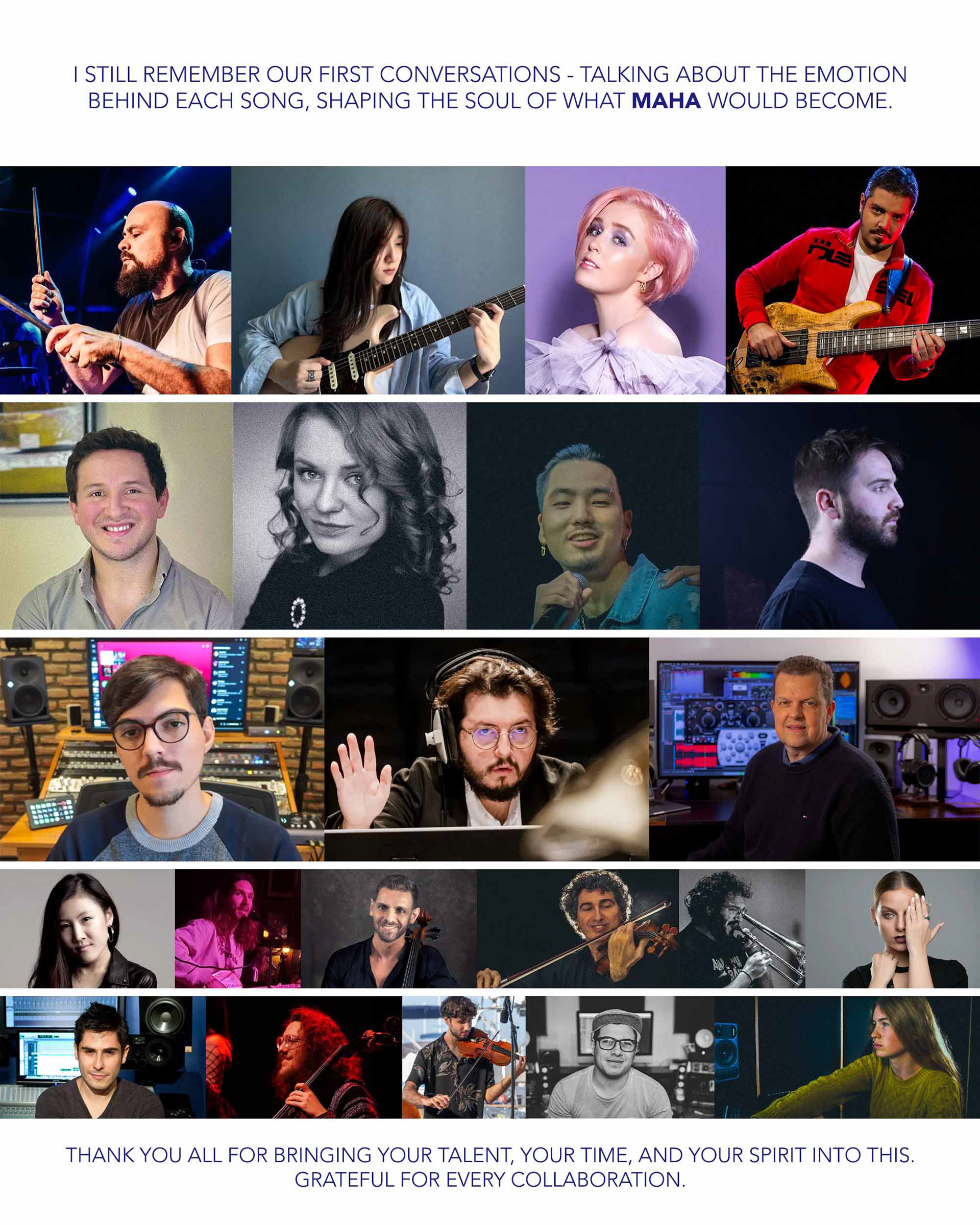
ALLY ROZARIO Background, Harmony Vocals
ANGEL CLARE Vocal Director, Background, Harmony Vocals
ANDRÉ VASCONCELLOS Bass Guitar
Alexandre Lunardelli Music Copyist
DAMIAN BOLOTIN Violin
DOROTHY TAKEV (Fucking Dance) Background Vocals
DANIEL CHOUINARD (Falling Through The Fire) Cello
ERIC MCLELLAN Marketing Advisor
FEDERICO HENCKER (Falling Through The Fire) Mastering Engineer
Gonzalo Eyzaguirre Mentor/Consultant
HAN JUN RYU Acoustic, Electric Guitar
HYUNJU LEE Background, Harmony Vocals
JONAS HOCHERMAN Trombone
JOSUE GONZALEZ Pianist, Keys
KEIRA MCKENNA (Freaking Dance, Slash The Ghost) Beat Maker
LUCIANO VASSÃO (All Tracks) Lead Mastering Engineer, Apple Digital Master
MINSOO SUNG Beat Maker
MAXWELL MAYNARD (Live Beyond) Producer, Composer
MARK WANG Photographer
MARCO PESCOSOLIDO Cello
MUSIVERSAL Recording Studio
NADAV SKLOOT (Slash The Ghost) Violin
PEDRO PARDAL Drums
PSZ RECORDS Production Company
PRIDHVI SUNAIN ZORO Lyricist, Composer, Director, Producer, Executive Producer
RHYS ZACHER (Live Beyond Instrumental) Mixing, Mastering Engineer
YAGO MARQUES (All Tracks) Lead Mixing Engineer